
Support Undergraduate Research in Synthetic Biology!
Help send the UO iGEM team to Paris and turn groundbreaking research into real-world impact!
Your support brings these goals in reach:
- Ambitious, accomplished student researchers learn hands-on skills in cutting-edge research, preparing them for successful careers in the sciences
- Students gain exposure to cutting-edge synthetic biology and the chance to represent the University of Oregon on an international stage
- The iGEM project elicits support from startup incubators and can launch their research into the commercialization and mass production stage
- Potentially reduce the harmful effects of nitrogen-based fertilizers with wide-ranging impacts on communities worldwide
Project Motivations
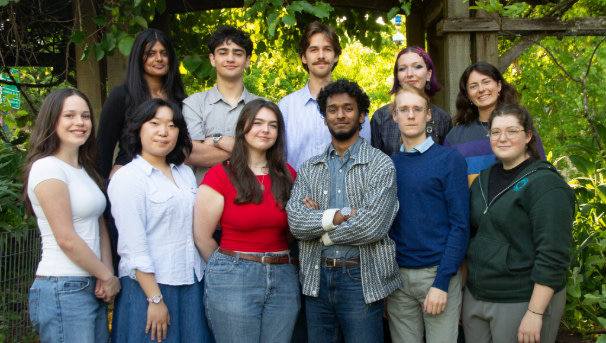
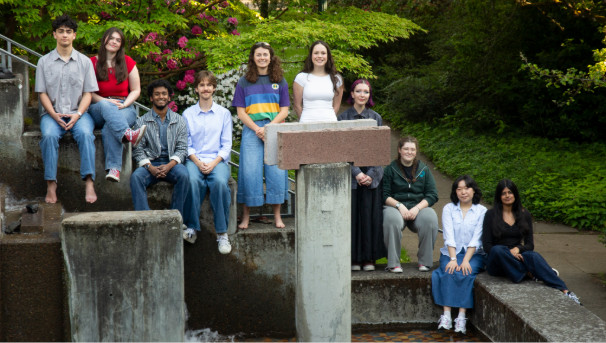
The UOregon iGEM 2026 team is a group of young and motivated scientists who have set out to prevent the negative environmental and health impacts caused by nitrogen-based fertilizers, while creating a more effective fertilizer.
Only around half of nitrogen-based fertilizers are taken up by the plant they’re administered to; the rest seeps into the soil and groundwater in the form of nitrate, eventually hitting bodies of water or wells. This excess nitrate can harm the local ecosystem. For instance, algae feeding on the excess nitrogen may form algal blooms, depleting sunlight and dissolved oxygen so aquatic life cannot survive. Drinking nitrate-contaminated well water can lead to dangerous health ramifications such as respiratory distress, abdominal cramping, vomiting, thyroid dysfunction, or bladder cancers.
One in five private wells exceed the threshold for a safe level of nitrate. Rural communities lack the support and access required to test for this, resulting in a population of well owners completely unaware of the danger occurring right under their nose. In addition, farmers have no real incentive to spend the money, resources, labor, and time to slow down the environmental impact that doesn’t directly affect their farm's yield and profit.
iGEM Conference Travel Opportunity
The iGEM Jamboree is an international conference and competition for student-led synthetic biology projects. Thousands of attendees communicate their research and network with each other and with potential industry partners. To scale our proof-of-concept project to a market-ready form, we’ll need to collaborate with the right people, and the conference is the perfect place to do so.
Attending the conference will benefit more than just our project. The Jamboree gives students unique exposure to cutting-edge synthetic biology and the chance to represent the University of Oregon on an international stage. This deepens their education and provides connection to future research careers.
Travel costs roughly $3,000 per student, and we can only afford to send a small number of our team members with our current funds. Each member on the team has expertise in a particular part of the project, so sending more members to the conference will allow us to effectively communicate. A convincing presentation can open our project to support from startup incubators and launch our research into the commercialization and mass production stage. Because of the large size and short time frame of the conference, the more members there will lead to more chances for collaborating.
Wet lab experimentation
To execute our goal of sequestering excess nitrates in agricultural runoff, we have designed a novel bacterial system to capture nitrate and convert it into a usable fertilizer. The bacteria will be embedded in a filter along either a subsurface drainage system or well, where there will be easy access for collecting the product. Our design incorporates three main components: uptake, storage, and collection.
For the bacterial cell to more efficiently uptake nitrate, the cell’s existing mechanism needs to be tweaked. Our bacteria of choice, E. coli, uses proteins called NarK and NarU to take in nitrate and spit out nitrite. Not only do we want the most amount of nitrate in the cell, but an excess amount of nitrite in the environment is toxic. This is why we’d computational design an improved version of these proteins and validate it in the wet lab, so as to vastly increase the amount of nitrate in our cell.
Once nitrate is in our cell, it’ll need to be converted to a nitrogen-rich substance that is stable and ready to be given to plants. The path inside the cell we’re aiming for the nitrate to follow is: nitrate will be converted to nitrite, then ammonium, glutamine and glutamate, aspartate and arginine, and finally our storage unit, cyanophycin. Cyanophycin is found in cyanobacteria and is used to store extra nitrogen. But in order for the nitrate to precisely follow this path, elements contributing to the synthesis of these intermediates need to be upregulated, while elements in irrelevant pathways will be repressed.
When there is enough nitrogen stored in the form of cyanophycin, the BcsB protein will be expressed and allow the bacteria to group together with each other. Now the harvesting process is as simple and most effective as possible.
Experimentation for this project will cost around $2,500 to support the synthesis of DNA constructs, highly specific proteins, bacterial transformation, reagents, hardware, and laboratory consumables necessary to build and test our initial design.
$50
General Lab Items
This donation helps us to purchase lab items such as protective gloves, pipette tips, petri dishes, and test tubes!
$100
Research Materials
$100 buys one length of DNA or an enzyme, we need these to conduct our research!
$615
iGEM Conference Ticket
This ticket will purchase one student's entry fee to present at the Grand Jamboree in Paris.
$2,500
Wet Lab Experimentation
Support the synthesis of DNA constructs, highly specific proteins, bacterial transformation, reagents, and laboratory consumables necessary to build and test our design.
$3,000
Send one student to Paris!
$3,000 will cover the cost of flights, housing, transportation, and the Grand Jamboree ticket for one student!